Pilates squats: How they help us in real life
Why I teach squats in Pilates
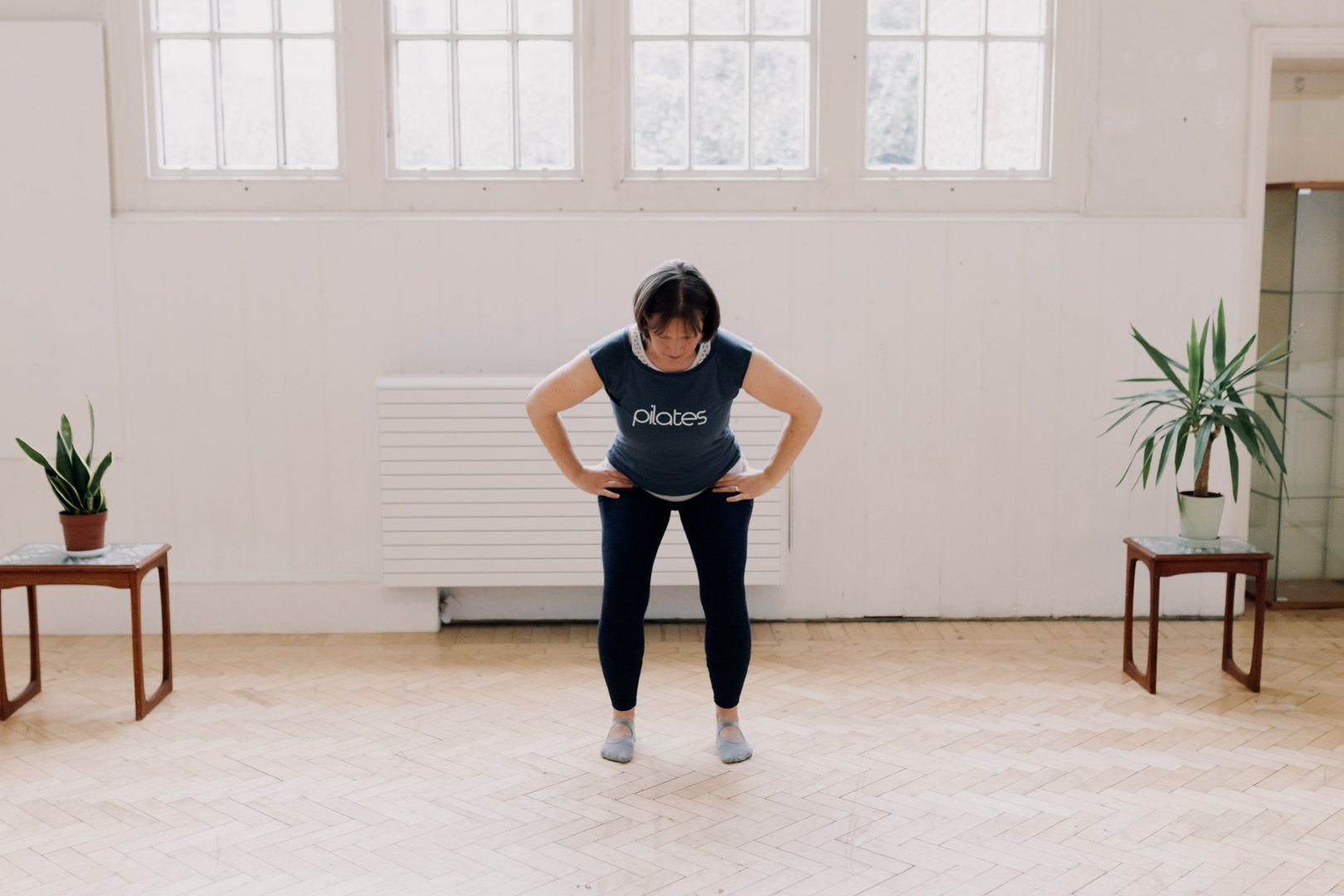
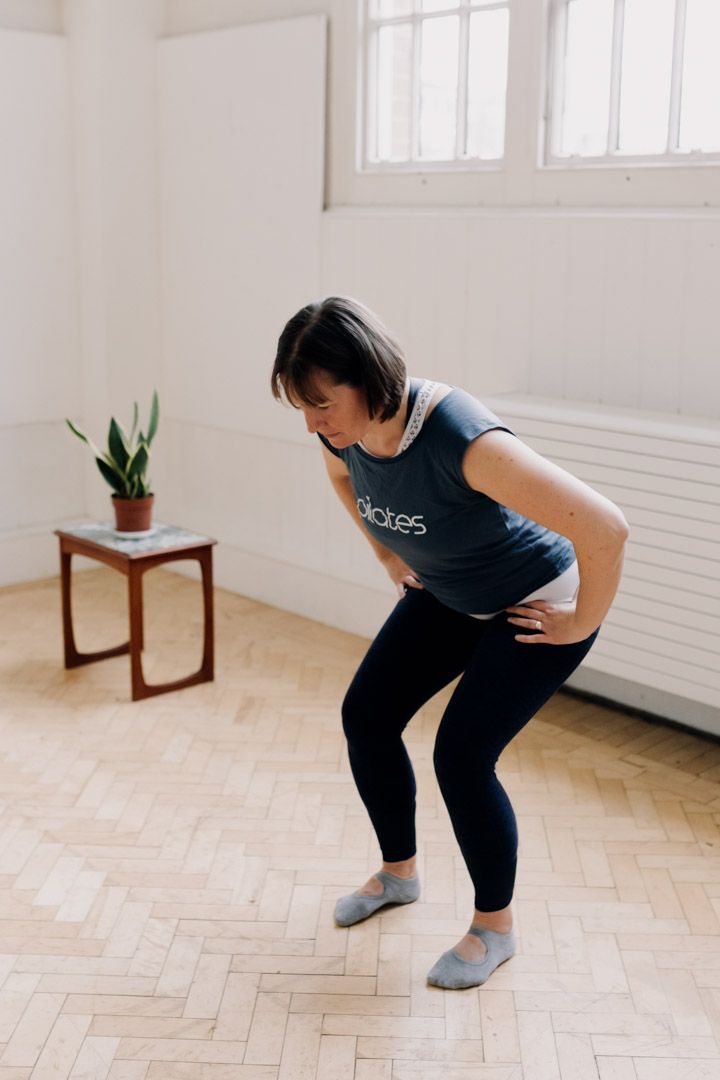
When we hear the word squat, we might picture someone lifting weights in a gym. But the squat is actually one of the most useful movements we perform in everyday life. We squat whenever we sit down into a chair. We squat when we stand back up. A squat helps us lower ourselves into the car, get out of it, sit onto the toilet, get out of the bath and negotiate stairs. We may not think of these movements as squats, but they involve similar movement patterns and therefore we can practice squats to support our movements in daily life.
Pilates squats are functional exercise
One of the great benefits of Pilates is the emphasis on controlled, purposeful movement. A Pilates squat gives us an opportunity to practise bending at the hips and knees while maintaining control through the feet, pelvis and trunk. We can work on our alignment, balance, strength, mobility and coordination—all within one relatively simple movement. And, as always in Katie’s classes, the movement is also combined with a breathing pattern and core muscle activation. Check out my previous blog series on my website for more on this aspect of Pilates.
As the movement becomes more familiar, its benefits may become more transferable into everyday activities. If we think about getting out of a chair, it involves shifting our weight forward, placing our feet securely on the floor, and then generating enough force through our legs and straightening our hips and knees to bring ourselves upright. That's a squat pattern.
Getting out of the car requires something very similar, as does rising from the bath or toilet or getting up from a low seat. Practising these movements in class helps us build the physical capacity to perform them more confidently outside the exercise class. Additionally, the practice, and repetition, of such movement patterns supports bone health as well as muscle mass and strength in the large leg muscles, which may benefit our health more generally too.
Strong legs support independence
As we get older, maintaining strength in the lower body becomes increasingly important. Leg strength isn't just about being able to exercise. It contributes to our ability to move around our homes and communities, manage steps, get up from different surfaces and respond to the physical demands of everyday life. This is particularly important because everyday environments don't always provide us with a perfectly positioned chair at the ideal height. Sometimes the seat is low, or the stairs are steep. Sometimes we need to get up from the floor or lower ourselves down into a chair more carefully. The stronger and more capable our legs are, the more options we have, which in turn supports our independence in our later years.
Squats and the stairs
Stairs provide another excellent example of why squat strength matters. Every step requires us to support and move our body weight using the muscles around the hips, knees and ankles. Going upstairs requires us to produce force to lift the body upwards, while coming downstairs requires us to control our descent. That second part is important but is perhaps often overlooked. Being able to lower yourself with control is a skill we use constantly in daily life, and a lack of this control may put us at a higher risk of injury, especially when stepping off kerbs, or when steps are uneven heights. A Pilates squat can help us practise that controlled lowering and rising, building awareness and strength that can transfer into everyday movement.
Getting in and out of the car
Something as ordinary as getting in and out of a car can become more challenging when lower-body strength, balance or mobility declines. The movement involves lowering our body into a relatively low seat, often while turning the body. Later, we need to generate enough force through our legs to stand back up. The movement may be repeated several times a day, without us ever considering it exercise. By practising squat patterns, sit-to-stand movements and weight transfers in Pilates, we are rehearsing some of the same physical demands. We're not training for a perfect Pilates movement. We're training for the movements that matter to us in life, both now and for the future.
Pilates is about preparing the body for real life
This is why functional movements such as squats are so valuable within Pilates. We’re not exercising simply for the sake of exercising. We're developing the strength, control, balance, mobility and confidence that underpin everyday movements. A squat might look like a simple exercise on a Pilates mat or beside a chair. But underneath that movement is something much more meaningful: the ability to lower, rise, step, transfer weight and keep moving through life. The aim isn't to do the biggest or deepest squat, lift the heaviest weight or complete the most repetitions. Rather, the aim is to build a body that remains capable for as long as possible. Ultimately, good movement isn't about how well we perform in an exercise class, it's about how well that movement serves us when we walk out of the class and into our life.
If you’d like to learn how to squat with good form, it’s advisable to have some coaching from a professional such as a personal trainer or group exercise instructor. And if you’d like to join Katie’s warm and welcoming regular weekly Pilates classes in Hook, simply email me, including your name and number and let’s get you started!