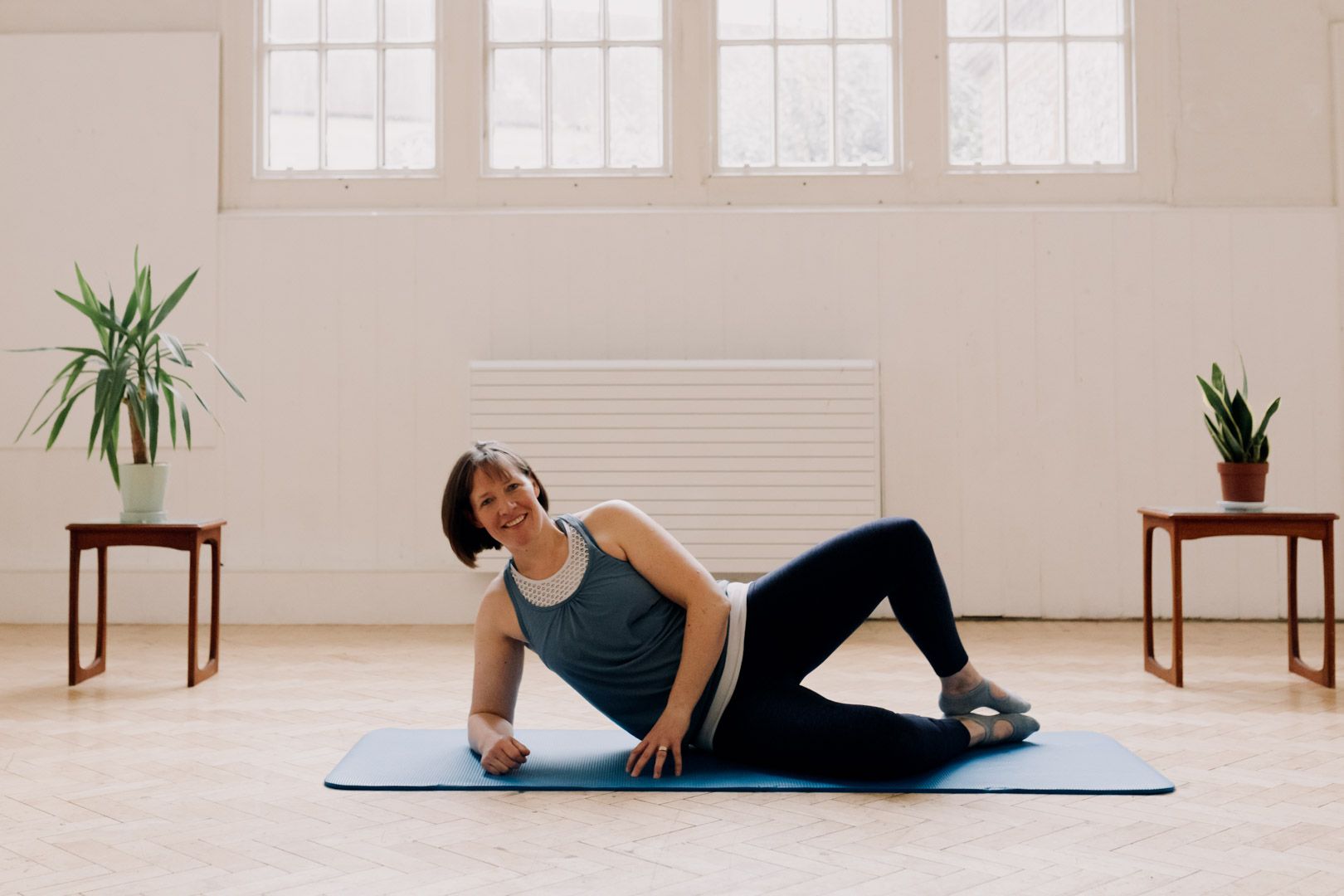
Pilates for beginners. Answers to 6 common questions
Answers to 6 common questions about Pilates for beginners
This month I thought I’d write an article sharing my thoughts on some of the most common questions beginners ask about Pilates. Whilst Pilates has become very popular, it may feel a bit daunting for beginners, so I hope this article helps if you’ve been considering giving it a try. These responses are based on my own teaching style and experience, which will vary from one instructor to the next. This article is for interest and information only and is neither advice nor instruction.
1. What is Pilates, and how is it different from yoga or other workouts?
Pilates is a form of exercise that focuses on controlled, mindful movements, often emphasizing core strength, posture, and stability. Whilst it shares some similarities with yoga—like mindful breathing and body awareness—Pilates tends to use repeated exercises to build control and alignment rather than holding or flowing through poses. Additionally, each exercise tends to target specific muscle groups.
2. Do I need to be fit or flexible to start Pilates?
Pilates is designed to be accessible for beginners. In mixed-ability groups, such as mine, exercises can be modified to suit different fitness levels, flexibility, and experience. The focus is on moving safely, slowly, and with control, which makes it suitable for many people. To join Katie's Pilates the main physical pre-requisite is that you can safely and independently get down and up off the floor, using a chair if required.
3. What equipment do I need—can I do it at home or only in a class?
You can start Pilates on a simple mat at home—no equipment is required. Many exercises just use body weight, whilst others may use small props like a resistance band, Pilates ring, or foam roller. We often use a resistance band in Katie's Pilates, but this is always optional. Many people prefer the social contact of being in-person in a group whilst under the watchful guidance of the instructor to help them correct their technique when required.
4. How often should I practice Pilates?
Consistency matters more than intensity. Many beginners start with 1–2 sessions per week. You can adjust the frequency as you become more comfortable and familiar with the exercises, and as you gradually build strength and stability. Katie's Pilates classes are either 45 or 60 minutes long. The longer sessions include a 10-minute relaxation at the end of the class.
5. What are the main benefits of Pilates for beginners?
Pilates is often appreciated for helping people feel more aware of their body and their movements. Beginners may notice improvements in posture, balance, core control, flexibility, and overall body coordination. Many also enjoy the calm, focused pace of classes, which can make exercise feel less rushed or intimidating than other workouts, as well as more mindful.
6. What if I have back pain, injuries, or other physical limitations?
Katie's Pilates can usually be adapted to accommodate back pain, injuries, or mobility issues—but it’s important to consult a healthcare professional prior to starting if there are any existing conditions. I also recommend a brief phone call with me before the first class to discuss any concerns. Additionally, participants should listen to their body throughout each class to avoid worsening any symptoms or conditions.
Pilates can feel welcoming for beginners because it’s adaptable, mindful, and structured in a way that encourages learning at your own pace, with a focus on control, awareness, and consistency. If you'd like to give Katie's Pilates a try, simply email me to enquire and book your place in a warm and welcoming regular weekly class in Hook. The first session can be taken as a one-off before committing to the rest of the block. If you have any further questions, check out the FAQs page on my website
here, or get in touch and we can arrange a call.